Why the World Abandoned the Gold Standard
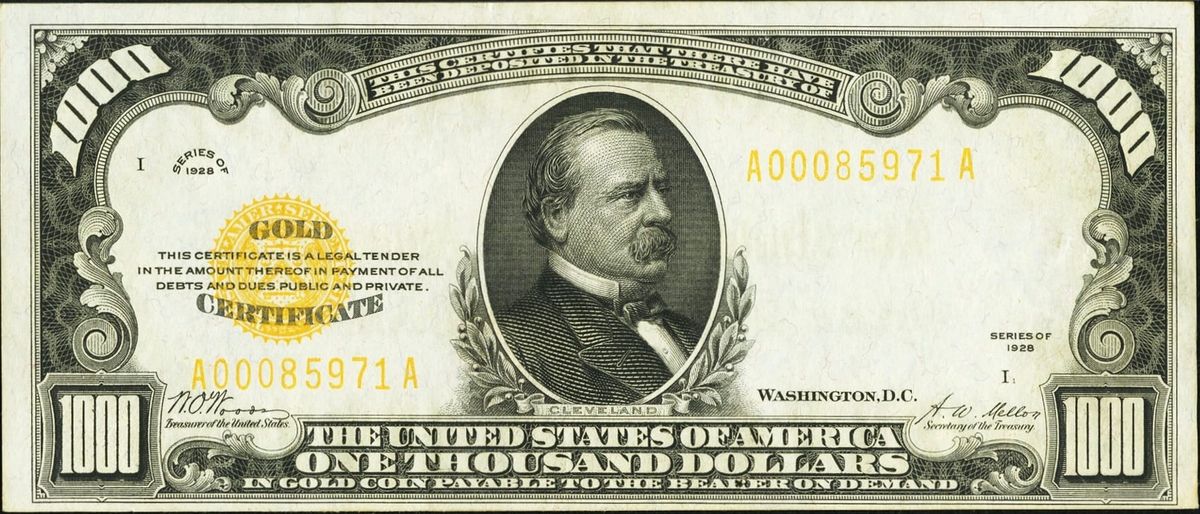
The gold standard didn’t die of theory—it was killed by necessity.
For more than a century, the gold standard was treated as the bedrock of responsible money. Currencies were tied to a fixed quantity of metal, governments faced hard limits on how much they could spend and print, and prices stayed remarkably stable over long stretches of time. Then, in a series of crises spanning two world wars and the Great Depression, that system was dismantled—piece by piece, country by country—until the final link was severed in 1971.
The shift was not a sudden ideological revolt against “sound money.” It was a reluctant, often desperate response to pressures the gold standard could no longer contain: the financing of total war, the collapse of output and employment in the 1930s, the demands of expanding welfare and defense states, and the simple fact that a growing global economy needed more liquidity than the world’s gold stock could reliably supply. What replaced it—fiat currency managed by central banks—brought flexibility at the price of discipline. Understanding why that trade-off was made remains essential to any serious discussion of money, inflation, and the limits of government power today.
The Classical Gold Standard and Its Limits
Under the classical gold standard that peaked from the 1870s to 1914, most major currencies were convertible into a fixed amount of gold. This constrained monetary expansion: governments and banks could increase the money supply only by acquiring more of the metal. The result was long-term price stability, relatively predictable exchange rates, and automatic pressure to correct trade imbalances through gold flows (World Gold Council, n.d.). Fiscal discipline was built into the system; large, persistent deficits risked draining reserves and forcing painful adjustments.
World War I and the Great Depression
World War I delivered the first fatal blow. The scale of military spending far exceeded what taxation or ordinary borrowing could cover. Belligerent nations suspended convertibility so they could print the money needed to fight (Britannica, n.d.). After the war, attempts to restore gold—often in the weaker form of a gold-exchange standard—proved fragile. The system never regained its pre-1914 credibility or automatic operation.
The Great Depression sealed the interwar fate of the gold standard. Countries that stayed on gold were forced into deflationary policies—raising interest rates and contracting credit—to defend reserves even as output and employment collapsed. Those that left gold earlier generally recovered faster. Britain abandoned it in 1931; the United States followed in 1933 (while still fixing a higher gold price for official transactions); others followed through the mid-1930s (Eichengreen, as cited in Wikipedia, 2026). Political pressure for jobs and relief outweighed the old commitment to convertibility.
Bretton Woods: A Temporary Hybrid
After World War II, the Bretton Woods system created a modified gold-exchange standard. The U.S. dollar was convertible into gold at $35 per ounce for foreign official holders, and other currencies were pegged to the dollar (Federal Reserve History, 2013). This arrangement worked while the United States held the bulk of the world’s monetary gold and ran large surpluses.
By the 1960s the system was under severe strain—the famous Triffin dilemma. The world needed more dollars for liquidity as trade and economies grew, but every extra dollar issued increased the risk that foreign holders would demand gold the United States could no longer supply. Persistent U.S. balance-of-payments deficits, fueled by overseas military spending (including Vietnam), foreign aid, and domestic programs, drained gold reserves. U.S. gold holdings fell sharply relative to foreign dollar claims. Inflation began rising in the late 1960s, and speculative pressure mounted (Bordo, 2017; Office of the Historian, n.d.).
The Nixon Shock of 1971
On August 15, 1971, President Richard Nixon suspended the dollar’s convertibility into gold. This “Nixon Shock” also included a temporary wage-price freeze and an import surcharge. The move was driven by the immediate threat of a run on remaining U.S. gold reserves, rising inflation, an overvalued dollar that hurt U.S. competitiveness, and the political desire to pursue expansionary domestic policy without the gold constraint (Federal Reserve History, 2013; Office of the Historian, n.d.). Attempts to salvage a fixed-rate system failed; by 1973 major currencies floated, and the Jamaica Accords of 1976 formalized the end of the gold link.
Why the Shift Was Inevitable
Several forces made the gold standard unsustainable in the twentieth century:
- Inflexibility in crises: Gold limited the ability to expand the money supply during recessions or financial panics, amplifying downturns.
- War and the modern state: Total wars and large peacetime spending on defense and social programs required financing that gold reserves could not support without severe deflation or political revolt.
- Liquidity needs of a growing world economy: Global trade and output expanded faster than the available supply and distribution of monetary gold.
- Domestic political priorities: Expanding suffrage, stronger labor movements, and democratic governments increasingly valued full employment and growth over external convertibility and fixed exchange rates.
- Practical collapse under Bretton Woods: The United States could no longer honor official gold convertibility at the fixed price without catastrophic reserve losses (Bullionstar, n.d.).
The Enduring Trade-Off
Gold imposed long-run price discipline and limited government profligacy, but it produced sharper short-term volatility and left policymakers with fewer tools against unemployment or banking crises. Fiat money gives central banks the ability to act as lenders of last resort, smooth business cycles, and respond to shocks. The cost is the constant risk of inflation, larger deficits, and dependence on the credibility of institutions to restrain money creation.
No major economy has returned to a pure gold standard. Debates continue about whether some rules-based or commodity anchor would improve long-term stability. The historical record, however, is clear: the political and economic costs of defending gold convertibility in the face of twentieth-century shocks proved higher than the benefits. The move away from gold was not primarily an ideological rejection of sound money. It was the cumulative result of wars, depression, fiscal expansion, and the practical impossibility of maintaining fixed gold parities in a changed world.
References
Bordo, M. D. (2017). The operation and demise of the Bretton Woods system: 1958 to 1971 (NBER Working Paper No. 23189). National Bureau of Economic Research. https://doi.org/10.3386/w23189
Britannica. (n.d.). The decline of gold. In Encyclopaedia Britannica. Retrieved August 18, 2026, from https://www.britannica.com/money/money/The-decline-of-gold
Bullionstar. (n.d.). The gold standard: History, mechanics, and modern relevance. https://www.bullionstar.com/blogs/gold-silver-101/the-gold-standard/
Federal Reserve History. (2013, November 21). Nixon ends convertibility of U.S. dollars to gold and announces wage/price controls. https://www.federalreservehistory.org/essays/gold-convertibility-ends
Office of the Historian. (n.d.). Nixon and the end of the Bretton Woods system, 1971–1973. U.S. Department of State. https://history.state.gov/milestones/1969-1976/nixon-shock
Wikipedia. (2026). Bretton Woods system. https://en.wikipedia.org/wiki/Bretton_Woods_system
World Gold Council. (n.d.). What is the gold standard system? https://www.gold.org/history-gold/the-classical-gold-standard