The Mysterious Disappearance of the 'VDB'
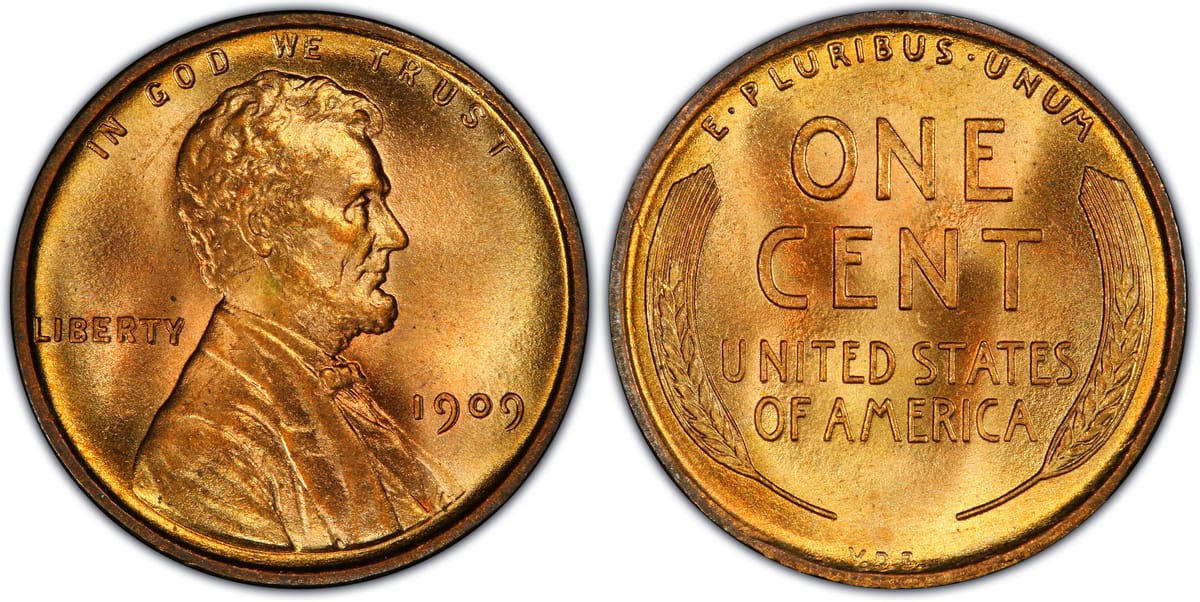
If you’ve ever sorted through a jar of old wheat pennies, you’ve probably noticed that some 1909 Lincoln cents have tiny initials “V.D.B.” on the bottom of the reverse (under the wheat stalks), while others—especially those minted later in the year—don’t. The sudden removal of those three little letters in the middle of the first year of issue caused one of the biggest controversies in 20th-century U.S. coinage history. Here’s what really happened.
The Birth of the Lincoln Cent
In 1908, the United States Mint decided to commemorate the centennial of Abraham Lincoln’s birth by placing his portrait on the cent—the first time a real person (instead of an allegorical Liberty) would appear on a regular-issue U.S. coin. President Theodore Roosevelt personally selected sculptor Victor David Brenner to design the coin after being impressed by Brenner’s earlier Lincoln plaque.
Brenner’s design was beautiful: Lincoln’s bust on the obverse, two stalks of durum wheat framing the denomination on the reverse. Brenner proudly placed his initials “V.D.B.” in tiny letters at the 6 o’clock position on the reverse, exactly where he had placed them on his original plaque. This was standard practice for medalists and not unusual at the time.
The Coins Hit Circulation – And All Hell Broke Loose
The new Lincoln cents were released to enormous public excitement on August 2, 1909. Lines formed outside banks and sub-treasury offices. Over 27 million were struck at Philadelphia and San Francisco in the first few months.
But within days, newspaper editors and the public started complaining about those three tiny letters. Headlines screamed:
- “Brenner Advertising Himself on Lincoln Penny!”
- “Artist’s Initials Too Prominent – An Insult to Lincoln!”
- “V.D.B. Monogram Bigger Than Lincoln’s Name!”
The criticism seems absurd today—the initials are less than 1 mm tall—but in 1909 the public and press were hypersensitive to anything that looked like commercial advertising on money. Some even claimed the initials were larger than the word “LIBERTY.”
Chief Engraver Charles Barber Enters the Picture
Mint Chief Engraver Charles E. Barber had opposed the Lincoln cent from the beginning. He felt slighted that an “outsider” (Brenner) had been chosen over the Mint’s own staff. When the public outcry began, Barber saw his chance. He quickly recommended to Mint Director Frank Leach that the initials be removed immediately removed “to avoid further controversy.”
On August 11, 1909—just nine days after release—Director Leach ordered the removal of V.D.B.’s initials from the reverse die. All new dies were made without them.
The Two 1909 Varieties Were Born
This abrupt change created two famous varieties:
- 1909 V.D.B. (with initials)
- Philadelphia: 27,995,000 minted
- San Francisco: 484,000 minted (1909-S V.D.B.)
These are the famous ones. The tiny San Francisco issue is one of the great 20th-century rarities (worth $1,000+ in circulated grades, $10,000+ in red uncirculated).
- 1909 plain (no V.D.B.)
- Philadelphia: approximately 72 million minted for the rest of the year
Very common in circulated grades today. - San Francisco: mintage of about 1.8 million—much like its' with VDB counterpart, a highly sought after key date.
- Philadelphia: approximately 72 million minted for the rest of the year
Brenner’s Quiet Comeback
Victor Brenner was understandably furious about the removal of his initials, but he had the last laugh. In 1918, when the wheat cent design was slightly modified (Lincoln’s cheek and coat strengthened), the Mint quietly restored Brenner’s initials—this time on the obverse, cut into the truncation of Lincoln’s bust where they remain to this day (look under Lincoln’s shoulder on any wheat cent from 1918 onward).
Why the Legacy
The 1909 V.D.B. episode remains one of the classic examples of public overreaction influencing coin design. Today, collectors love both varieties:
- The 1909-S V.D.B. is the undisputed “King of Lincoln Cents” and one of the most famous U.S. coins of all time.
- Even the common 1909 V.D.B. Philadelphia issue trades for $10–$20 in circulated condition—purely because of the story behind those three little letters.
Next time you find a wheat penny in change or your grandfather’s jar, flip it over and check the bottom of the reverse. If it’s dated 1909 and has those tiny “V.D.B.” initials, you’ve got a piece of one of the wildest scandals in American numismatic history.
Happy hunting!