The Most Expensive Coin Ever Sold: A $18.9 Million Golden Legend
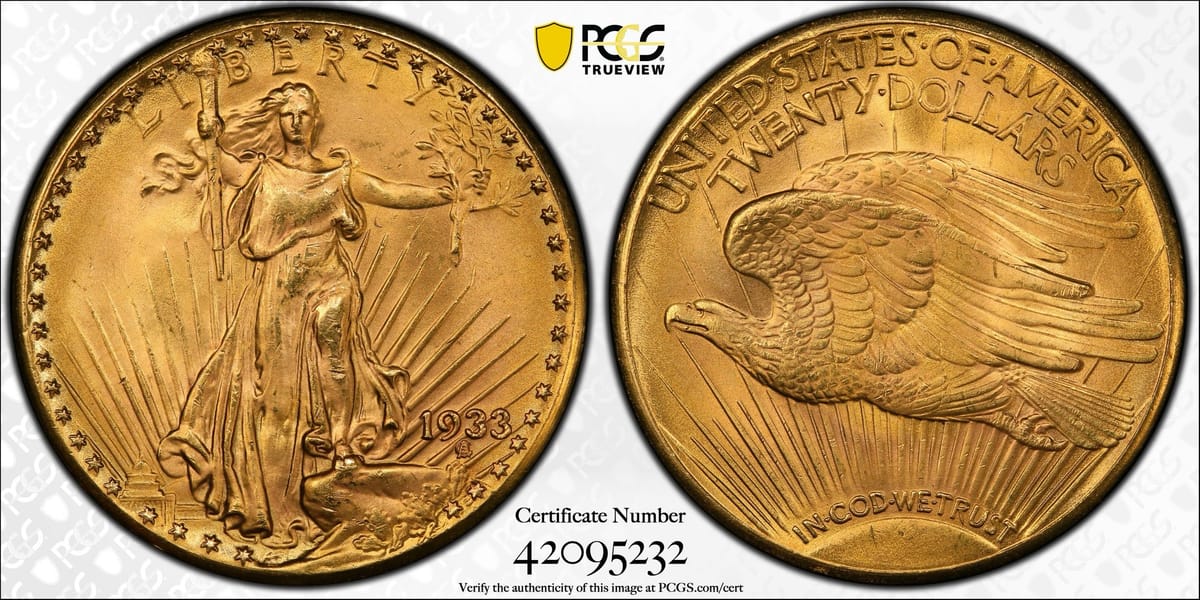
In the glittering world of numismatics, where history is traded in whispers and fortunes are forged from metal, few artifacts capture the imagination quite like a rare coin. These aren't just pieces of currency—they're time capsules, etched with stories of empires, scandals, and economic upheavals. But if there's one coin that stands above all others as the undisputed king of auctions, it's the 1933 Saint-Gaudens Double Eagle. In June 2021, this gleaming $20 gold piece shattered records by selling for a jaw-dropping $18,872,250 at Sotheby's in New York, making it the most expensive coin ever sold at auction. Adjusted for inflation to today's dollars, that price would eclipse $23 million, but even without the math, it's a testament to rarity, rebellion, and raw allure.
What makes a single coin worth more than a luxury yacht or a small mansion? Let's dive into the saga of the Double Eagle, explore why it fetched such an astronomical sum, and peek at the runners-up in this elite league of numismatic treasures.
The Birth of a Forbidden Fortune: The 1933 Double Eagle's Backstory
Minted in the depths of the Great Depression, the 1933 Double Eagle was designed by the legendary sculptor Augustus Saint-Gaudens, whose Liberty figure—striding forward with an olive branch and torch—evokes the promise of a resurgent America. On the reverse, a soaring eagle in flight symbolizes freedom and power. The U.S. Mint struck about 445,500 of these $20 gold coins in 1933, but fate had other plans.
As the economy crumbled, President Franklin D. Roosevelt issued Executive Order 6102, banning private gold ownership and ordering citizens to surrender their bullion to the Federal Reserve. The Double Eagles, fresh from the presses, were never released into circulation. Instead, nearly all were melted down into bars to stabilize the dollar. But a handful slipped through the cracks—illegally pilfered from the Philadelphia Mint by insiders, including a worker named George McCann who smuggled out at least 10 specimens.
For decades, these rogue coins became the stuff of underground legend. The U.S. Secret Service hunted them relentlessly, deeming them stolen property. One infamous example surfaced in 1944 when a Philadelphia dealer named Israel "Izzy" Switt sold several to collectors, only for the feds to swoop in and reclaim them. By 1952, all known 1933 Double Eagles were presumed destroyed or locked away—except one.
That survivor? It belonged to King Farouk of Egypt, who snapped it up in a clandestine deal. After his overthrow in 1952, the coin vanished into the shadows until 1996, when collector Stephen Nagy consigned it to auction. But the U.S. government intervened, seizing it as contraband. What followed was a 13-year legal odyssey involving appeals, affidavits, and even a presidential pardon of sorts. In 2009, a federal judge ruled it legal to own, but only after the buyer paid its $20 face value as "redemption." Private equity billionaire Stuart Weitzman bought it for $7.3 million (plus fees and that cheeky $20), dubbing it his "Oscar" for its Hollywood-level drama.
Weitzman held onto it until 2021, when he decided to cash in—literally. Offered as part of his shoe-designer wife's collection (yes, really), the coin hit the block with estimates of $10–15 million. Bidding erupted into a frenzy, climbing past $16 million before a mysterious phone bidder clinched it at $18.87 million, including premiums. The buyer? Anonymous, but whispers point to a deep-pocketed institution or ultra-high-net-worth individual. Today, it's the only privately owned 1933 Double Eagle, a unicorn in a herd of melted ghosts.
Why This Coin? The Perfect Storm of Rarity and Romance
At its core, the Double Eagle's value isn't about the 0.9675 troy ounces of 90% pure gold (worth roughly $4,082.55 today). It's the intangibles:
- Extreme Rarity: Only one legal private example exists. Two others are in the Smithsonian, but they're off-limits to collectors.
- Historical Scandal: Born of economic desperation and bureaucratic blunders, it embodies Prohibition-era intrigue—gold hoarding, mint heists, and government crackdowns.
- Artistic Mastery: Saint-Gaudens' design is often called the most beautiful U.S. coin ever, rivaling classical sculptures.
- Provenance Drama: From Egyptian palaces to FBI raids, its journey reads like a thriller novel.
In numismatics, condition matters too—this specimen graded MS-65, pristine despite its 90-year adventure. But it's the narrative that turns collectors into fanatics, willing to pay a premium for a piece of living history.
Honorable Mentions: The Top Contenders
The Double Eagle reigns supreme, but the auction block is littered with other heavyweights. Here's a quick rundown of the top five most expensive coins sold, based on public auction records (prices include buyer's premiums, unadjusted for inflation):
| Coin | Sale Price | Auction Date & House | Key Fact | |
|---|---|---|---|---|
| 1 | 1933 Saint-Gaudens Double Eagle | $18,872,250 | June 2021, Sotheby's | The only private example; illegal for decades. |
| 2 | 1794 Flowing Hair Silver Dollar | $10,016,875 | Jan 2013, Stack's Bowers | Likely the first U.S. silver dollar struck; finest known specimen. |
| 3 | 1787 Brasher Doubloon (EB on Wing) | $9,360,000 | Aug 2021, Heritage Auctions | Early American gold coin by private minter Ephraim Brasher. |
| 4 | 1822 Capped Head Left Half Eagle | $8,400,000 | Nov 2021, Stack's Bowers | One of just three known; overdate rarity from early Mint. |
| 5 | 1907 Ultra High Relief Double Eagle | $7,000,000+ (est.) | Various, private sales | Matte proof version; artistic pinnacle of U.S. coinage. |
These sales highlight a trend: Early American coins dominate, fueled by their ties to the nation's founding. But outliers like the 1913 Liberty Head Nickel ($4.56 million in 2018) prove that even "base metal" can fetch fortunes if it's mysterious enough.
The Future of Coin Auctions: Will Records Keep Shattering?
Since the Double Eagle's sale, the market has cooled slightly amid economic headwinds, but digital auctions and global buyers keep the fire alive. Platforms like Heritage and Stack's Bowers report surging interest from Asia and Europe, where coins symbolize timeless wealth. With blockchain tech eyeing provenance tracking and NFTs mimicking scarcity, who knows? The next record-breaker might be a digital twin—or perhaps another long-lost Double Eagle surfacing from a forgotten vault.
One thing's certain: In a world of fleeting crypto booms and stock market swings, these ancient discs remind us that true value endures. The 1933 Double Eagle isn't just the priciest coin ever sold—it's a golden middle finger to impermanence.
What about you? Got a lucky penny in your pocket with a story? Drop a comment below—I'd love to hear your numismatic tales.
Sources: Guinness World Records, Wikipedia, Stack's Bowers, and various auction archives. All prices as of latest public records.