George T. Morgan: The Man Behind America’s Most Beloved Silver Dollar
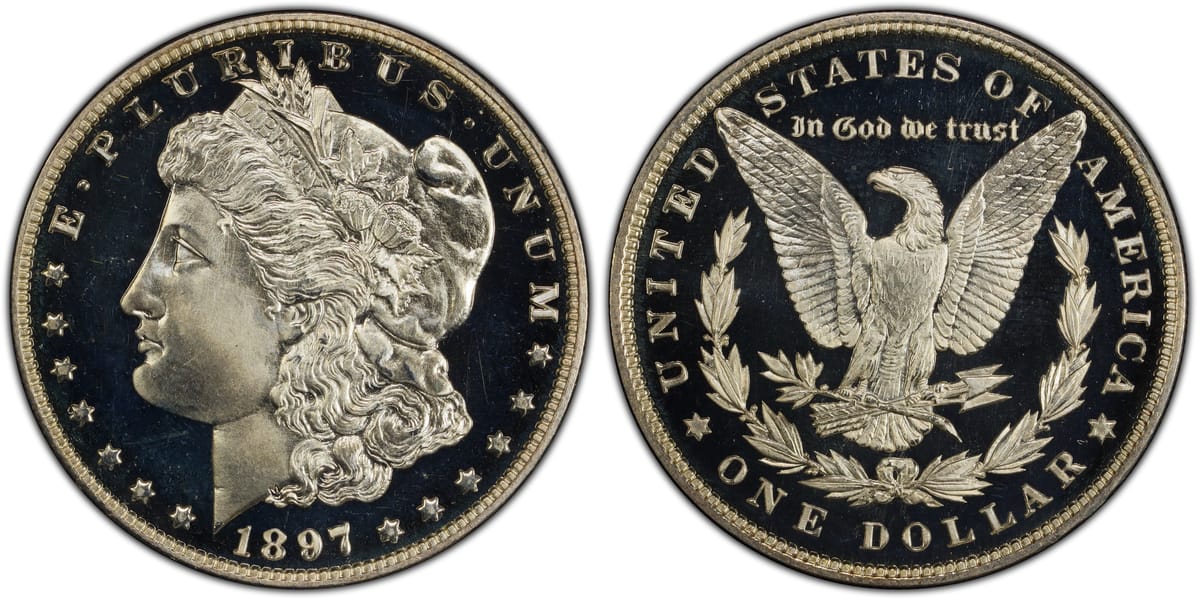
The Morgan Silver Dollar, minted from 1878 to 1904 and again in 1921, is one of the most iconic and collected coins in American history. Its elegant yet powerful design has captivated generations of numismatists. Few people, however, know the full story of the coin’s creator: George Thomas Morgan, a talented British engraver who spent nearly half a century shaping U.S. coinage.
Early Life and Training in England
George Thomas Morgan was born on November 24, 1845, in Birmingham, England, a city renowned for its metalworking and engraving crafts. He displayed artistic talent early and studied at the Birmingham School of Art, winning multiple prizes for modeling and design. Morgan later trained in London at the South Kensington Art School (now part of the Royal College of Art) and apprenticed under the famous Wyon family of engravers, assisting Leonard Charles Wyon on medals and coin dies. This rigorous British training gave him a masterful command of die engraving that few American engravers of the era could match [1, 2].
Arrival at the Philadelphia Mint (1876)
In 1876, U.S. Mint Director Henry R. Linderman, dissatisfied with the aging designs of longtime Chief Engraver William Barber and his son Charles, traveled to Europe seeking new talent. He hired two young British engravers: George T. Morgan and sculptor Joseph A. Bailly. Morgan arrived in Philadelphia in October 1876 and was appointed assistant engraver — a move that immediately created tension with the Barber family, who saw the foreigners as threats to their dominance [3, 4].
Designing the Morgan Dollar (1877–1878)
The passage of the Bland-Allison Act in February 1878 required the Treasury to resume striking silver dollars in large quantities. Linderman directed Morgan to create an entirely new design that would feature a distinctly “American” portrait of Liberty rather than the traditional Greco-Roman ideal.
For the obverse, Morgan selected Anna Willess Williams, a Philadelphia schoolteacher, as his model after seeing her profile and declaring it the most perfectly formed he had encountered in England or America. Miss Williams sat for five modeling sessions in late 1877. Morgan’s Liberty wears a Phrygian cap edged with wheat and cotton, surrounded by “E PLURIBUS UNUM,” the date, and thirteen stars.
The reverse depicts a bold eagle with wings spread, clutching arrows and an olive branch, encircled by “UNITED STATES OF AMERICA,” “ONE DOLLAR,” and “IN GOD WE TRUST.” The first Morgan dollars were struck on March 11, 1878 [5, 6].
A Long Career Overshadowed by Rivalry
Despite the immediate success of his dollar, Morgan remained assistant engraver for almost four decades. After William Barber’s death in 1879, Charles Barber became Chief Engraver in 1880 and reportedly blocked Morgan’s advancement out of professional jealousy. Morgan still produced important work during this period, including:
- The 1883 Hawaiian coinage for King Kalakaua
- Numerous commemorative medals and exposition awards
- Pattern coins and trial pieces
Only after Charles Barber’s death in February 1917 was Morgan, at age 71, appointed the seventh Chief Engraver of the United States Mint by President Woodrow Wilson. In 1921, during his tenure, the Mint struck the final issue of Morgan dollars before transitioning to the Peace dollar design [7, 8].
Death and Enduring Legacy
George T. Morgan died on January 4, 1925, at the age of 79, less than four years after seeing his famous design struck one last time. He is buried at Mount Peace Cemetery in Philadelphia.
Though his coins were unsigned until the 1921 issues carried a tiny “M” on the neck truncation of Liberty, the Morgan dollar remains one of the most recognized and cherished series in American numismatics. Massive Treasury releases in the 1960s and 1970s, combined with high-grade survivors from the great melts of the early 20th century, fueled a collecting boom that continues today.
George T. Morgan may have labored for decades in the shadow of the Barbers, but his masterpiece has long outshone them all.
Next time you hold a gleaming Morgan silver dollar, you’re holding the work of a quiet, determined Englishman who gave America one of its most beautiful and enduring coins.
References
- Taxay, Don. The U.S. Mint and Coinage: An Illustrated History from 1776 to the Present. New York: Arco Publishing, 1966 (reprinted 1983).
- Vermeule, Cornelius. Numismatic Art in America: Aesthetics of the United States Coinage. 2nd ed. Whitman Publishing, 2007.
- Breen, Walter. Walter Breen’s Complete Encyclopedia of U.S. and Colonial Coins. New York: Doubleday, 1988.
- Yeoman, R.S. A Guide Book of United States Coins (The Red Book), various editions (history of Morgan dollar and Mint personnel).
- Van Allen, Leroy C., and Mallis, A. George. Comprehensive Catalog and Encyclopedia of Morgan & Peace Dollars. 4th ed. Virginia Beach: DLRC Press, 1998.
- Q. David Bowers. Silver Dollars and Trade Dollars of the United States: A Complete Encyclopedia. Wolfeboro, NH: Bowers and Merena Galleries, 1993.
- U.S. Mint Annual Reports, 1876–1925 (available via the U.S. Mint and Newman Numismatic Portal).
- Lange, David W. The Complete Guide to Morgan Silver Dollars. Virginia Beach: DLRC Press, 2002.