America’s First Mass-Produced Coin: The Wild, Controversial 1793 Chain Cent
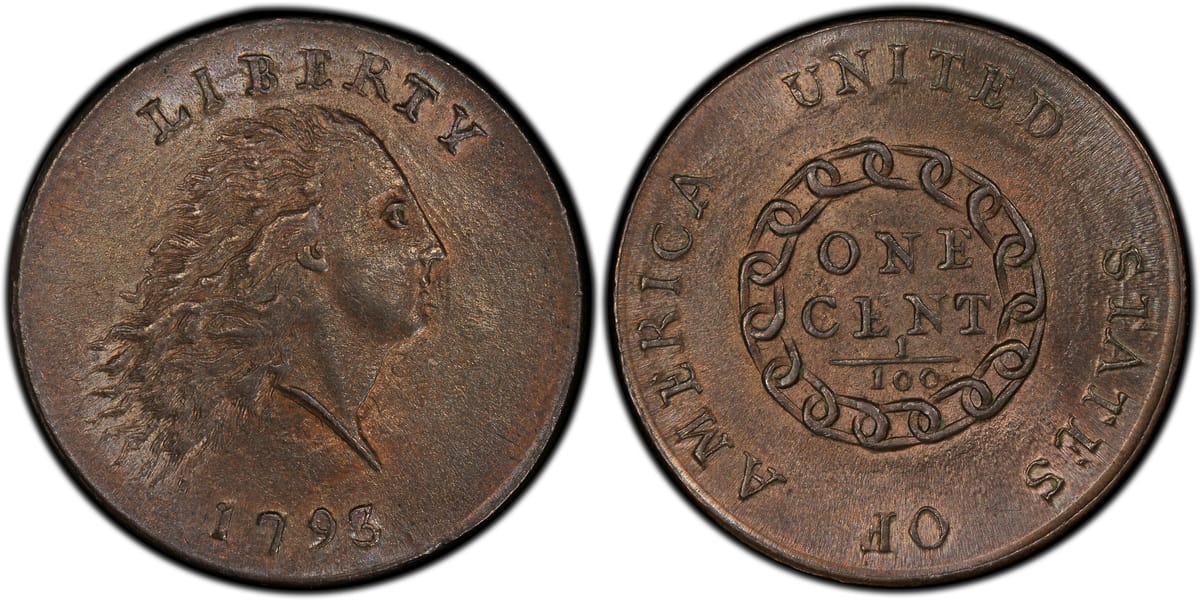
It’s ugly. It’s crude. It terrified half the country when it appeared.
And yet, the 1793 Chain Cent holds a permanent spot as one of the most important coins in American history. This wasn’t just the first regular-issue coin struck for circulation by the brand-new United States Mint; it was also the first coin to ever carry the word “CENT” and the first to show a symbolic chain on an American coin. Within weeks of its release, newspapers were calling it “monstrous” and “an insult to liberty.” Today, collectors simply call it legendary.
The Birth of U.S. Coinage – March 1793
The United States was barely holding together in early 1793. The Constitution was only four years old, the federal government was broke, and foreign silver and gold coins still dominated daily commerce. Congress had passed the Mint Act of 1792, but actually getting coins out the door proved harder than anyone expected.
Finally, in a rented basement on 7th Street in Philadelphia, the first delivery of cents was made on March 1, 1793. President Washington himself mentioned the event in a letter. The coins were struck on a hand-cranked screw press by workers who sometimes had to hammer the planchets (blanks) flat with sledgehammers because the Mint’s rolling mills weren’t ready yet.
Total mintage: only 36,103 pieces.
What Does a Chain Cent Actually Look Like?
Obverse
A right-facing Liberty with wild, flowing hair that looks like she just stuck her finger in a light socket. Above her is the word LIBERTY and the date 1793.
Reverse
A chain of 15 links enclosing the words ONE CENT and the fraction 1/100. Around the border: UNITED STATES OF AMERICA.
The chain was meant to symbolize strength and unity—“a chain is only as strong as its weakest link,” etc.
But to a population that had just fought a revolution against tyranny, a chain looked suspiciously like… a chain. Slavery. Bondage. Monarchy. Newspapers erupted:
“The chain on the reverse is but a bad omen for Liberty.”
— Gazette of the United States, April 1793
Within months the Mint yanked the design. The replacement “Wreath Cent” appeared in April with a much friendlier leafy wreath instead of chains.
The Three Major Varieties Collectors Obsess Over
- Chain AMERI. (the one we’re talking about) – about 3,000–4,000 believed to survive
- Chain AMERICA (spelling fixed, still has the scary Liberty) – slightly more common
- Chain Periods (periods before and after date and LIBERTY) – the rarest of the three
How Much Is One Worth Today?
Condition is everything with these hand-struck, 232-year-old copper coins.
| Grade | Recent Auction Price (2024–2025) | Notable Sale |
|---|---|---|
| Good-4 | $20,000 – $40,000 | Common grade |
| Very Fine-20 | $150,000 – $250,000 | Eye appeal matters hugely |
| MS-63 Brown | $1,000,000+ | Record: $2.35 million (2012, now worth ~$3M adjusted) |
| MS-65 Red-Brown | $5–10 million (if one exists) | None confirmed in full Red |
Why Collectors Lose Sleep Over It
- Birthplace coin: First cent, first mass-produced U.S. coin, first chain motif.
- Political lightning rod: Immediate public backlash forced a redesign in weeks.
- Extreme rarity in high grade: Only a handful grade above Fine, and Mint State examples are national treasures.
- Raw, primitive look: The rough edges, uneven strikes, and wild hair give it a visceral connection to 1793 that polished later coins lack.
Where Can You See One in Person?
If you can’t drop seven figures, the best examples live in museums:
- Smithsonian National Numismatic Collection (two pieces)
- American Numismatic Society, New York
- ANA Money Museum, Colorado Springs
Final Thought
The 1793 Chain Cent is the numismatic equivalent of the Declaration of Independence written in angry copper. It’s imperfect, instantly controversial, and absolutely essential to the story of America. It’s the coin that taught a fledgling nation what it did (and didn’t) want to see on its money.
If you ever get the chance to hold one in hand (gloves required!), do it. You’ll feel the hammer blows of 232 years later.
Got a Chain Cent story or just love early American copper? Drop it in the comments; these coins deserve every bit of obsession they get.